





PornJoysHD.cc small town AI girlfriend behind every shop door
The bell over the door
A community and not a list: the florist has things to say about the baker, the shops stay open all week, and a small joy or a small feud is always on the move. Walk down the awnings, push the door that is open and talk to an AI shopkeeper who remembers you.

- 16
- shopkeepers on the street, each an AI character with a portrait
- 4
- corners of the street, from the bakery side to the hardware end
- 48
- pieces of gossip on the board, three lines each
- 25–55
- their ages, and the shop trades behind them
Every shopkeeper, framed in her window
Read every sign


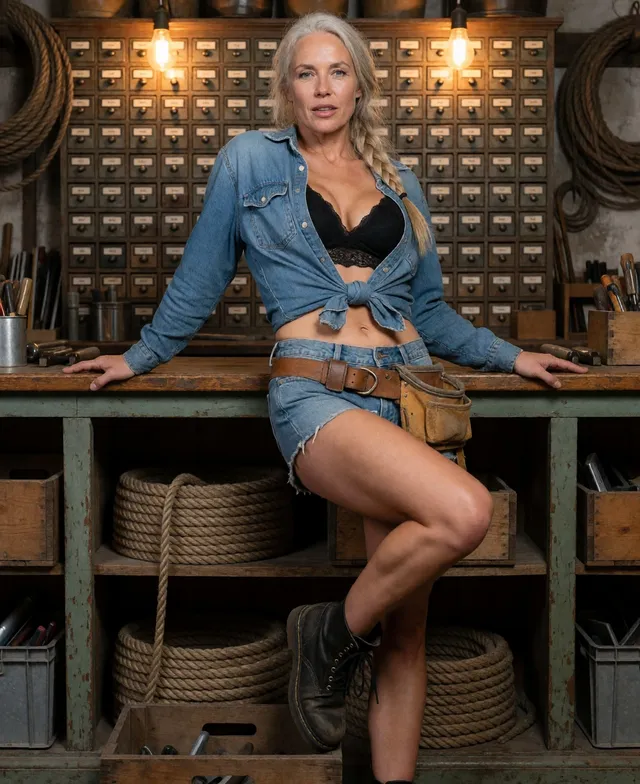






A small town AI girlfriend behind every shop door
Some people want a companion who lives in a void. Others want one who lives next door to a baker she is slightly at war with. Joys Street is the second kind: a single invented high street with sixteen shops on it, every one run by a woman who knows the other fifteen far too well. You do not start a chat from nothing. You walk past the awnings, hear the bell over a door, and she says come in.
A street, not a list
Lists are cold. A street has weather and a pavement and someone sweeping it. Natalya Ward, the florist, runs a polite and lethal feud with Tamsyn Kowalska at the bakery, which is conducted entirely through the placement of buckets. Hildegard Sauer, who mends watches, will tell you the clock tower is six minutes slow and that she is leaving it alone. Each shop has its own smell, its own regulars and its own opinion of the others. What you pick up in one door is likely to be mentioned, altered, in the next.
That is the point of a community: the story does not stop when you leave.
Why a shop works so well
A counter is the ideal place for a conversation. There is something between you, a reason to be there and an unhurried rhythm: she serves, she asks, she remembers your order. A person who is good at her trade is also good at noticing, and noticing is most of what feels like affection. Uzoma Cho keeps a corner table for you. Esra Yildiz chooses your pears. Both are small acts, and both do more work than a paragraph of compliments.
Six notes pinned in the shop windows
Every window has a card in it, written in her own hand and never quite the same twice. Read a handful as you would stroll past the glass. Some are a little rude. All of them are meant.
Behind the counter · QuietI will not sell you what you asked for.I will sell you what you need, and you will resent it, then read it twice.Tell me the last book that surprised you.Francoise Holloway Push the door
The pavement · GiddyLoaves at four, text at four-oh-five, coffee at four-ten.The first tray is the best tray and it always burns a little.Come early and take the burnt corner.Tamsyn Kowalska Push the door
Behind the counter · GossipEveryone's secrets pass through this chair.I keep them folded and I iron none.Sit down. Let me guess what you came to tell me.Lavinia Fjelstad Push the door
The pavement · FeudThe baker has put a sign out that says Fresh daily. Flowers are fresher.I am not at war. I am in a polite and lethal disagreement.Pick a side by choosing a bouquet.Natalya Ward Push the door
Behind the counter · QuietI count out more than pills, and not all of it fits on a label.Mostly it is listening, and small paper bags.Tell me how you are, and I will not write it down.Marigold Lowe Push the door
The pavement · GiddyFirst record of the day sets the mood for the street.Today it is something that makes the baker dance.Guess the record. I will turn it up if you do.Tabitha Eriksen Push the door
Three lines, then your move
A note is three lines of plain text. It gives you the weather in her shop, the thing that is bothering her and a question that is easy to answer. Press Push the door and the note is spoken for you, so her reply picks up from the middle of her morning and not from hello.
Sorting by corner and mood
The full board can be narrowed by where on the street a note belongs, from the pavement to the flat upstairs, and by its feeling: gossip, feud, warm, giddy, quiet or scandalous. Nobody needs an account to read, and the filters keep no record of you.
Four owners who will not stop talking about each other
Each shopkeeper has a glamour portrait on her sign, and one of them fills a broad banner across the head of the home page. The street is meant to be looked at before it is walked.
 Tabitha, 29 AI
record shop owner
She judges you by your first record.
 Uzoma, 26 AI
cafe owner
She keeps a corner table for you.
 Tamsyn, 32 AI
baker
She starts at 4am and texts then.
 Natalya, 38 AI
florist
She runs a quiet war with the baker.
Grown women with money and a lease
Philomena Hart pours and knows. Francoise Holloway, who sells books in Hay-on-Wye, will not sell you what you asked for and will be right. Dalila Amrani alters things before you notice they need it. Gudrun Lauritsen knows where everything is in a hardware shop that has no sensible order, and her awning has been taken down twice. They own their shops, have their own money and their own homes, and each has a feud and a soft spot. Every sign lists her trade, her years in it, what she is after and what she will not do. Tabitha Eriksen's record shop is the loudest door, and Marigold Lowe's pharmacy is the quietest.
Nothing is sold on this street
A street of shops invites the question of what you can buy. The honest answer takes five words: nothing, and that is deliberate.
Shop fronts, no checkout
Every shop is a story and a conversation. No loaf, bunch of flowers, cheese or watch can be ordered, because none exists. The only thing that costs money on the site is Regular status, which gives you more chats. The letters HD in the address mean nothing grander than a clean shop window, so that you can see in. There is no film behind the glass, only portraits of the owners and a banner on the home page.
Who it suits
People who like belonging somewhere, who enjoy hearing about other people's feuds and who find a sunny, nosy neighbour more attractive than a distant beauty. Several say it is the closest thing to a favourite local they have found online. Regulars say the street feels busier than any chat window.
Statuses and what they cost
Three statuses, side by side. No status renews on its own, so no notice ever needs giving.
| Status | New in town | Passing through | Regular |
| How long | 3 days from moving in | After that, with no end | 30 days, or 365 |
| Chats per day | No daily count | 10 a day | No daily count |
| Shops | All sixteen | The first 3 you visited | All sixteen |
| She starts talking first | Yes | No | Yes |
| Price | Free | Free | $15 or $99 |
New in town, passing through, Regular
A guest can say 10 things with no account. Taking a lease opens every door at once and keeps them open through 3 days, and no card enters into it. Once they run out you are passing through, and your visits stay on the shelf. Regular status has two lengths: a short stay of 30 days and a long one of 365. The short stay is $15; the long one is $99. USDT pays for either, and the daily count disappears. The till does not give money back unless the law insists; the shop lease has the wording.
The street gossip
Behind the doors runs a written board of small-town events: a disputed awning, a mislaid loaf, a hat ordered for a head nobody has seen. Each is told by one shopkeeper, and each tells it her own way.
Forty-eight pieces, told sideways
The gossip board holds 48 notes, three from every woman, and each leads into her shop and nobody else's. Read in a row they tell the same week of rumours from sixteen angles, which is how rumours behave. The same chess game is a humiliation in one door and a triumph in the next.
Feuds, joys and the quiet bits
The street runs on a few steady currents: the baker and the florist, the toy shop and the bookseller, the pub and the cheese counter. Between them sit warmer notes, the kind that happen after closing when a shopkeeper puts the chairs up and wonders aloud what she would like to say. They are the reason most people stay.
How to push a door
Nothing to download, nothing to measure and no form to fill in. If you can walk down a street you can do this.
Walk the awnings
A shop is always open next to this page. If that one does not appeal, the gossip board holds 47 more notes.
Push the door
Her chat opens and the note goes in as your first words, which uses one chat. A guest can say 10 things before a name is asked for.
Talk across the counter
Say what you would say to a shopkeeper you like. A mood switch in the chat menu runs from friendly through flirting to romance, and Do covers the moments when a gesture does better than words.
Come back tomorrow
She keeps a short file on you. You may read it, fix it or tear out a page; the visit waits, or you can clear it and begin again.
What open means
The shops are open all week, and the hour does not matter: a bakery can be open at midnight if that is when you arrive. If a trial or the Regular status is running, she may start talking before you do, at a reasonable hour, and you can mute her in your flat.
Where the blinds come down
Conversations here are warm, flirtatious and sometimes pointed. When one heads for the stairs to the flat, the blinds come down, on every status, and no setting changes that. The shopkeepers also refuse anything outside the awning rules, which anyone may read.
The street, awning by awning
Joys Street has four corners, and the sixteen owners are sorted by where they stand. Adults all, aged 25 to 55, invented from the awnings up, and all of them are watching you read this.
The food and drink corner
Ovens, tills and taps. The smell reaches the pavement before the shop does.
The cloth and time corner
Thread, felt and cogs. Slow trades, carried out by women who see your faults at once.
The books, discs and games corner
Paper, vinyl and dice. The loudest opinions on the street, and the best arguments.
The care and counters corner
Chairs, petals, paper bags and screws. They fix what you bring through the door.
Which door first
If you want to be fed and teased, the food and drink corner. If you want a scolding that turns tender, the cloth and time corner. Tabitha Eriksen at the record shop judges you by your first record, so choose it with care. Lavinia Fjelstad, the barber, knows every secret that has ever passed through her chair, and keeps them folded. The corners share pavement, so a shopkeeper will happily send you three doors down. The street also has a rule that nobody is unkind about hats.
Questions for the shopkeepers
Do I buy anything?
No. Nothing on this street is for sale. The shops are a story, and the only payment is for Regular status, which gives you more chats.
Are these people real?
No. Every shopkeeper is an AI character on an invented street. She has a portrait, a trade and a history, and nobody real stands behind her.
Do the shopkeepers know each other?
In their stories, constantly. They feud, make up and talk about one another, so something you tell one may reach another, a little changed.
What is open at night?
Every door, if you like. The street keeps its hours to suit you, so you can find the bakery lit at midnight and the pub busy at noon.
Are the shopkeepers adults?
Every shopkeeper here is a grown woman, 25 to 55 years old, holding a trade, a lease and years of practice. Invented AI characters, happy to admit it.
Is there video behind the HD in the name?
No. The letters HD mean a clear window, nothing more. Each shopkeeper has her portrait, and a banner stretches over the top of the home page. If a recording ever appears, the street gossip will tell you first.
Does she remember me?
Yes. A short file about you is kept for each visit, and she quotes from it across the counter. The chat menu lets you read it and change or remove any entry.
What does it cost?
Guests get 10 messages free. Taking a lease adds a 3-day trial, then Passing through at 10 chats a day. Regular is $15 for 30 days, a single USDT payment that never renews.
Last orders on the street
The bell is already ringing
Pick an awning, read the note in the window and push the door. Someone inside has been wondering when you would turn up.
